
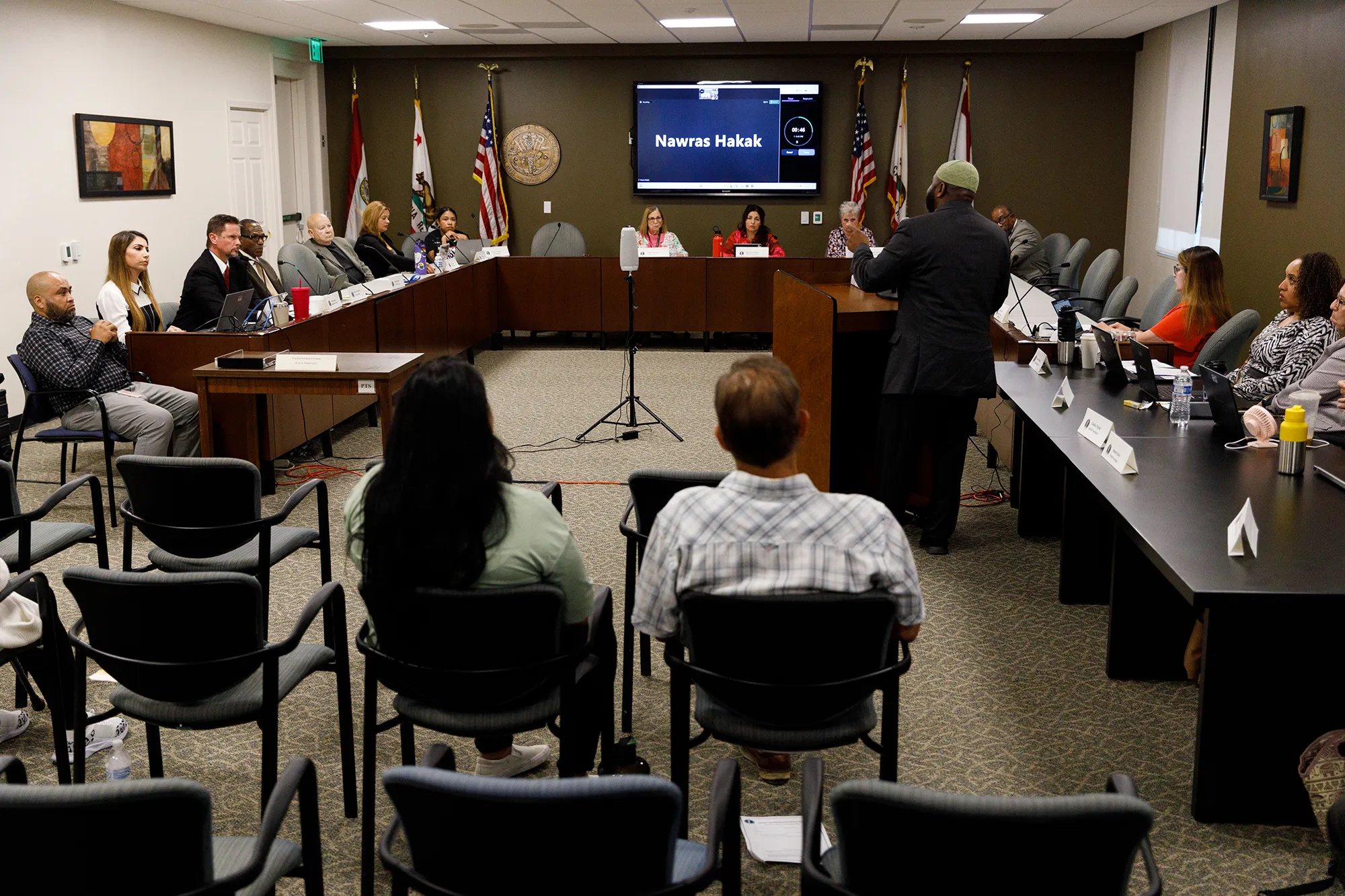
Effective January 1, 2026, new laws governing local educational agencies and committees will bring important changes to public meeting requirements. Senate Bill No. 707 (“SB 707”) amends over 20 sections of the Brown Act. While some of the revisions are non-substantive, four significant revisions will impact local agencies going forward. Chief among these revisions are changes to remote participation requirements for board members. Your agency should become familiar with these changes before they take effect on January 1, 2026.
I. New Structures and Options for Remote Participation at Public Meetings
SB 707 restructures and revises remote participation requirements for members of Brown Act bodies. With the enactment of the new law, options for remote participation by Brown Act body members in meetings are as follows:
A. Traditional Teleconference Participation
The traditional teleconference option for remote participation by board or other Brown Act body members remains in the Brown Act. Under this option, a board member may appear by teleconference if: (1) the physical location of the member is accessible to the public and is identified on the notice and meeting agenda; (2) the agenda is posted at the teleconference location; and (3) a quorum of the board is participating in person from within the agency’s jurisdiction.
B. Revised and New Remote Participation Options for Board Members
In addition to the traditional teleconference option, SB 707 either revises or adds four options for remote participation relevant to local education agencies.
- Revised “Just Cause” Option
A member of a Brown Act body may remotely participate in a meeting under the following circumstances:
- The member has “just cause,” which is limited to a childcare or caregiving need, a contagious illness, a physical or mental condition, travel on official government business, an immunocompromised family member, a physical or family medical emergency, or military service.
- The member notifies the board at the earliest opportunity with a general description of the “just cause,” and they participate via audio and video.
- The type of “just cause” allowing for remote attendance is noted in the minutes.
- The body complies with the general remote participation requirements described below.
Importantly, a board member may not use a “just cause” rationale for more than two meetings per year, if the body meets once per month or less, or, more than five meetings per year, if the body meets twice per month. This provision sunsets on January 1, 2030.
- New Remote Participation for Committee Members
Members of an “eligible subsidiary body,” which is a committee of a Brown Act body or board that serves in an advisory capacity, and does not take final action or have primary subject matter jurisdiction over elections, budgets, public library materials, or taxes, of a public agency, may use remote participation in the following circumstances:
- The body that created the committee authorizes (and re-authorizes every six months) the use of the provision.
- The committee itself authorizes use of remote participation.
- There is at least one physical location open to the public for the meeting, with at least one staff member present.
- Committee members must appear via video, with limited exceptions.
- The body complies with the general remote participation requirements described below.
This provision does not apply to an elected official who is also serving on a committee. This provision sunsets on January 1, 2030.
- New Remote Participation for Multi-Jurisdictional Bodies
Members of an “eligible multijurisdictional body,” which is a body comprised of representatives from more than one city, county, or special district or the governing body of a joint powers authority, may use remote participation in the following circumstances:
- The body adopts a resolution authorizing remote participation.
- A quorum of the body, including any member who receives compensation for service on the body, attends from physical locations open to the public.
- A member must appear via audio and video to appear remotely.
- The body complies with the general remote participation requirements described below.
Importantly, a member may not use this provision if they are within 20 miles of a physical meeting location. Also, a member may not use this provision to participate remotely for more than two meetings per year, if the body meets once per month or less, or, more than five meetings per year, if the body meets twice per month. This provision sunsets on January 1, 2030.
- New Remote Participation for Community College Student Organizations
“Eligible community college student organizations,” which include student body associations and other student-run community college organizations, as further defined, have specific authorization to use remote participation in the following circumstances:
- The community college’s board of trustees authorizes remote participation, and a majority of the community college student organization votes to do so.
- A quorum, as defined in the statute, participates from a single physical location which is open to the public and other physical location requirements are met.
- The body complies with the general remote participation requirements described below.
This provision sunsets on January 1, 2030.
- General Remote Participation Requirements – Applicable to All Options
All meetings at which a board member participates remotely under one of the options listed above must adhere to the following additional rules. The meeting agenda, notice and procedures must:
- Allow the public to observe and comment via a two-way audio-visual program or a two-way telephonic service and live webcasting;
- Include on the agenda notice of how members of the public may access and provide public comment;
- Pause meetings if there is a disruption in the broadcast or service used for remote public comment;
- Observe limits on when public comment must remain open, depending on the agenda structure;
- Identify any other individuals 18 or older in the remote board member’s location.
- Identify in meeting minutes any member(s) participating remotely and citing the applicable Brown Act provision(s).
II. Remote Appearance as Board Member Accommodation
SB 707 also addresses questions left by a 2024 Attorney General Opinion that concluded that the Americans with Disabilities Act generally requires a local agency’s legislative body to allow remote participation as a reasonable accommodation for a member with a qualifying disability that precludes their in-person attendance at meetings. SB 707 builds on the opinion by explicitly incorporating this option into the Brown Act.
Separate from the remote participation options noted above, SB 707 also provides that the Brown Act does not prevent the use of teleconference by a board member as a reasonable accommodation as long as: (1) the board member participates via video and audio technology (with some exceptions) and; (2) the board member discloses information about any other individuals 18 and older in their location. These requirements are in line with the Attorney General’s opinion and do not require remote public comment to be made available where a board member attends remotely as an accommodation.
III. Fully Remote Meetings During Emergencies
SB 707 permanently establishes the ability of a Brown Act body to conduct fully remote meetings during emergencies, similar to what was originally allowed by executive order in 2020 during the COVID pandemic. Where there is a declared state or local emergency, a board may hold a fully remote meeting without any physical location. The body must find that the remote meeting is necessary due to health or safety concerns and follow the general remote participation requirements noted above, except that it need not provide a live-video stream for the meeting if a two-way telephonic service is made available.
IV. Requirement for Oral Summary of Compensation
SB 707 alters the procedure for action on compensation for administrators. The Brown Act requires a board to “orally report a summary of a recommendation for the final action on the salaries, salary schedules, or compensation paid in the form of fringe benefits” to an “agency executive.”
“Agency executive” is currently defined by reference to another statute which excludes some school district administrators. SB 707 will not apply the oral report requirement to any “department head or other similar administrator office of the local agency.”
Importantly, a separate Brown Act provision, which limits discussion of compensation for local agency executives at special meetings, remains applicable only to those administrators who meet the original, more limited, definition of “agency executive.”
V. Additional Minor Amendments
SB 707 also makes several other minor amendments to the Brown Act:
- Removes the sunset provision from the Brown Act’s rules and limitations regarding board members communications on social media.
- Requires agencies to provide a copy of the Brown Act to each member serving on any Brown Act body.
- Broadens prohibition on discussion of compensation at a special meeting to include compensation to the legislative body members.
- Expands provisions around disruption and removal of persons from a meeting to those individuals attending remotely.
Complying with new meeting rules can be challenging, especially changes that are likely to require an update to policies, procedures, agenda and notice templates. If you need help understanding the new rules or conforming your existing policies, procedures and form documents to the new requirements, experts in our Board Ethics, Transparency & Accountability Group are ready to assist.